
Rules of golf etiquette
Lev also recommends using caution regarding what you share about yourself online. For example, don’t sext naked pictures or post pictures of alcohol use, drug use, or other information about your private life online https://megamoolah-slot.net/. Once these images and statements are uploaded to the Internet, they are there for the rest of the world to see, forever.
Sharing content online is an art, and good netiquette ensures you wield this power responsibly. Guidelines for posting and sharing content range from understanding your audience to selecting appropriate mediums. We’ll provide examples of both acceptable and unacceptable content sharing, empowering you to make informed decisions about what you contribute to the digital conversation.
This is true for both posting to online course walls or discussions—like those found in online programs at Rasmussen University—and with personal email communications with your professors and advisors. Using appropriate capitalization and focusing on your tone when writing will give your virtual communication a boost.
Your online activities leave a digital footprint that can be difficult to erase. Information and content shared online may be stored, archived, or shared by others, even if you delete it later. Being cautious about what you share helps maintain control over your digital presence. What you put online is permanent and can be used against you.
The same respect for privacy applies when uploading photos or videos online that include other people, whether in a public space or on your private social media page. Remember that if you tag people on Facebook, others can access these photos unless the people in them have adjusted their privacy settings.
Rules of email etiquette
An informal email is used for personal correspondence sent to those we have a friendly relationship with, like friends and family. A personal email is written with simple and casual language and can use a playful or personal tone. Unlike a professional email, an informal email has no format or templates to stick to.
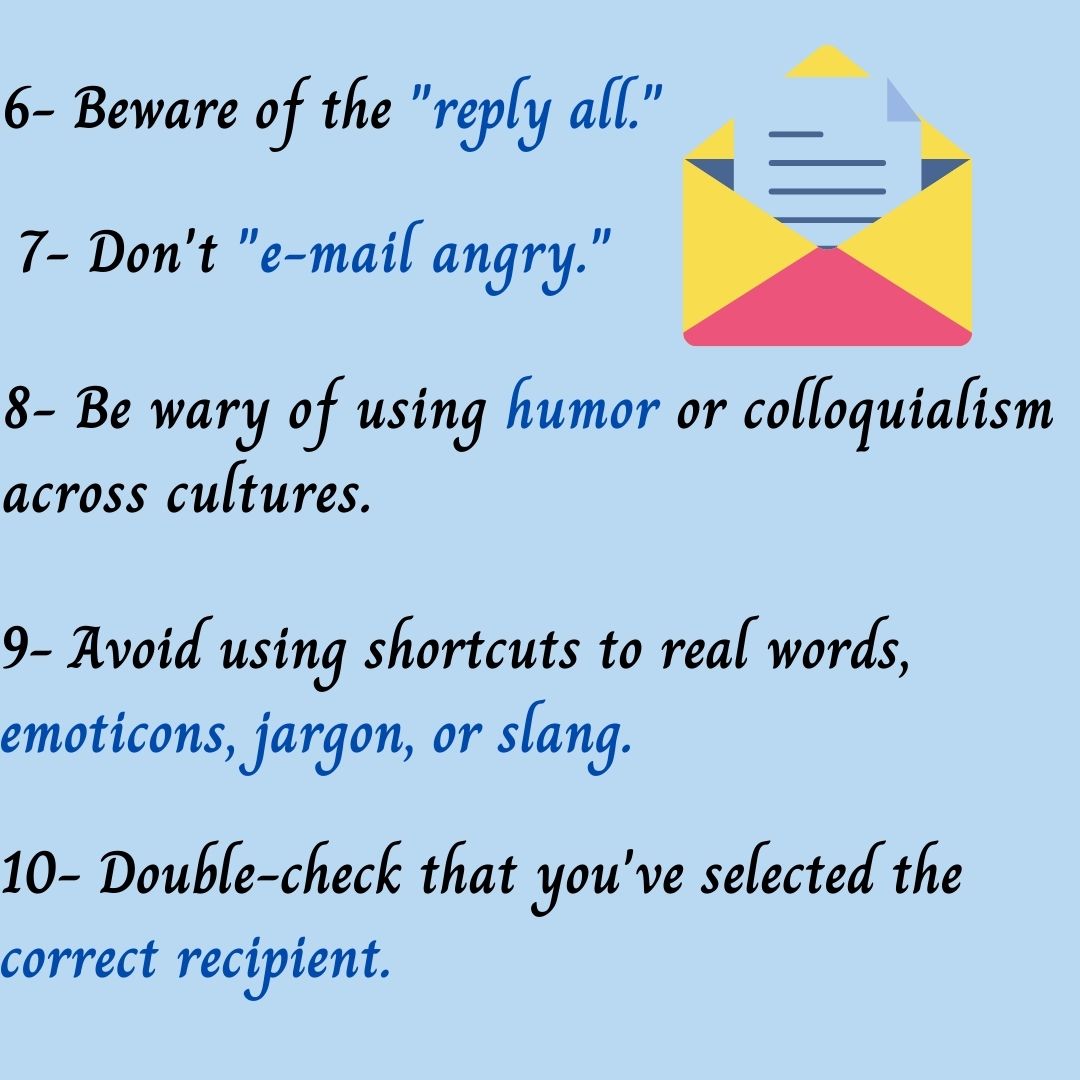
In emails, follow the same punctuation rules you’d follow in any other piece of professional writing. Save exclamation points for the rare instances that warrant them, end sentences with periods, and before you hit send, double-check for punctuation mistakes.
An informal email is used for personal correspondence sent to those we have a friendly relationship with, like friends and family. A personal email is written with simple and casual language and can use a playful or personal tone. Unlike a professional email, an informal email has no format or templates to stick to.
In emails, follow the same punctuation rules you’d follow in any other piece of professional writing. Save exclamation points for the rare instances that warrant them, end sentences with periods, and before you hit send, double-check for punctuation mistakes.
When writing emails, following certain core principles can help you communicate effectively. This section will cover key areas such as clarity, tone, subject lines, and response timing to improve your email skills.
Don’t make the recipient rack their brains to figure out what actions they need to take in response to your email. Make it clear what action is required and if there are any deadlines for those actions.
10 rules of golf etiquette
Hazards are typically marked with yellow or red stakes and lines. If your ball has landed in a hazard, you can take one free drop within two club lengths of the original spot. You must also ensure the ball does not move closer to the hole than its original spot. If your ball lands in a bunker, you must play the shot from within the hazard and rake it afterward.
We’ll explore the top 10 essential rules of golf that every player should know. These guidelines not only help maintain the game’s integrity but also enhance the overall experience, making it enjoyable for everyone on the course.
If you make a divot (creating a crater in the ground with your club), either replace it or fill it with provided sand. Different courses have different rules depending on the type of turf (replace or fill). Also, if you make a pitch mark on the green with your approach shot, be sure to repair it with a tee or ball mark repair tool.

Hazards are typically marked with yellow or red stakes and lines. If your ball has landed in a hazard, you can take one free drop within two club lengths of the original spot. You must also ensure the ball does not move closer to the hole than its original spot. If your ball lands in a bunker, you must play the shot from within the hazard and rake it afterward.
We’ll explore the top 10 essential rules of golf that every player should know. These guidelines not only help maintain the game’s integrity but also enhance the overall experience, making it enjoyable for everyone on the course.
If you make a divot (creating a crater in the ground with your club), either replace it or fill it with provided sand. Different courses have different rules depending on the type of turf (replace or fill). Also, if you make a pitch mark on the green with your approach shot, be sure to repair it with a tee or ball mark repair tool.
